
Certificate 20DSCF0460
Certificate number: 20DSCF0460 Weight: 70.75ct Dimensions: 31 x 24 x 10 mm Locality: Dobrkovska Lhotka – Zatacka Shape: Natural piece Quality: A Special attributes: – Color: Bottle green Date: 15. 8. 2016
Certificate number: 20DSCF0460 Weight: 70.75ct Dimensions: 31 x 24 x 10 mm Locality: Dobrkovska Lhotka – Zatacka Shape: Natural piece Quality: A Special attributes: – Color: Bottle green Date: 15. 8. 2016

Certificate number: 19DSCF5439 Weight: 87.05ct Dimensions: 38 x 20 x 15mm Locality: Dobrkovská Lhotka – Zatáčka Shape: Natural piece Quality: A+ Special attributes: – Date: 18.6.2016
Certificate number: 27DSCF5545 Weight: 67.05ct Dimensions: 28 x 20 x 14 mm Locality: Chlum Shape: Natural piece Quality: A Special attributes: Shiny, Color: Olive green, Date: 13. 2. 2018

Certificate number: 21DSCF8115 Weight: 34.3ct Dimensions: 29 x 17 x 13 mm Locality: Dobrkovska Lhotka – Zatacka Shape: Natural piece Quality: A+/++ Special attributes: – Shiny, Color: Brown green, Date: 27. 12. 2016

Certificate number: 21DSCF7399 Weight: 40.2ct Dimensions: 22 x 17 x 15 mm Locality: Dobrkovska Lhotka – Zatacka Shape: Boulder Quality: A+ Special attributes: – Shiny, Color: Brown green, Date: 8. 2. 2017

They were shaped by the same processes as partial primary shapes but we can’t identify any original (source) primary shape. Fragment shapes of moldavites

The initial shape of all splash-form moldavites were drops, which were created in the separation of bigger tektite melt mass. Other shapes of splash-form moldavites are the result of transformation of some parts of the original malleable drops by rotation. Moldavites with primary shape are very rare among moldavites, representing less than 1% of all…

Moldavites have formed in specific shapes from rotation of the viscous melt in the atmosphere. Many Moldavites have been found with the same recognized shapes seen in tektites from other worldwide localities. The present-day moldavite shapes are not only the result of their formation in the time of their origin but distinctly reflects also the…

Certificate number: 15DSCF2085 Weight: 12.95ct Dimensions: 25 x 11 x 6 mm Locality: Chlum Shape: Natural piece Quality: A Special attributes: – Shiny Date: 8. 6. 2015
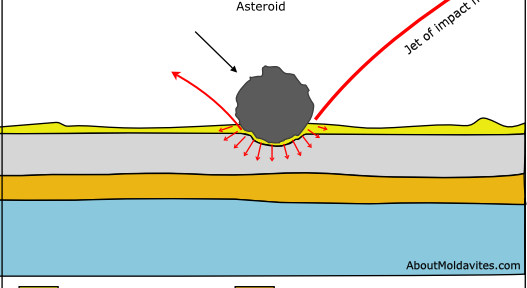
The general (scientific) theory of moldavites origin says that moldavites were formed by meteorite impact at Stuttgart (southwestern Germany) 14,800,000 years ago. Based on calculations and laboratory simulations, it is assumed that this meteorite was of a diameter from 500 to 1000 meters (1640 – 3200 ft.).
